

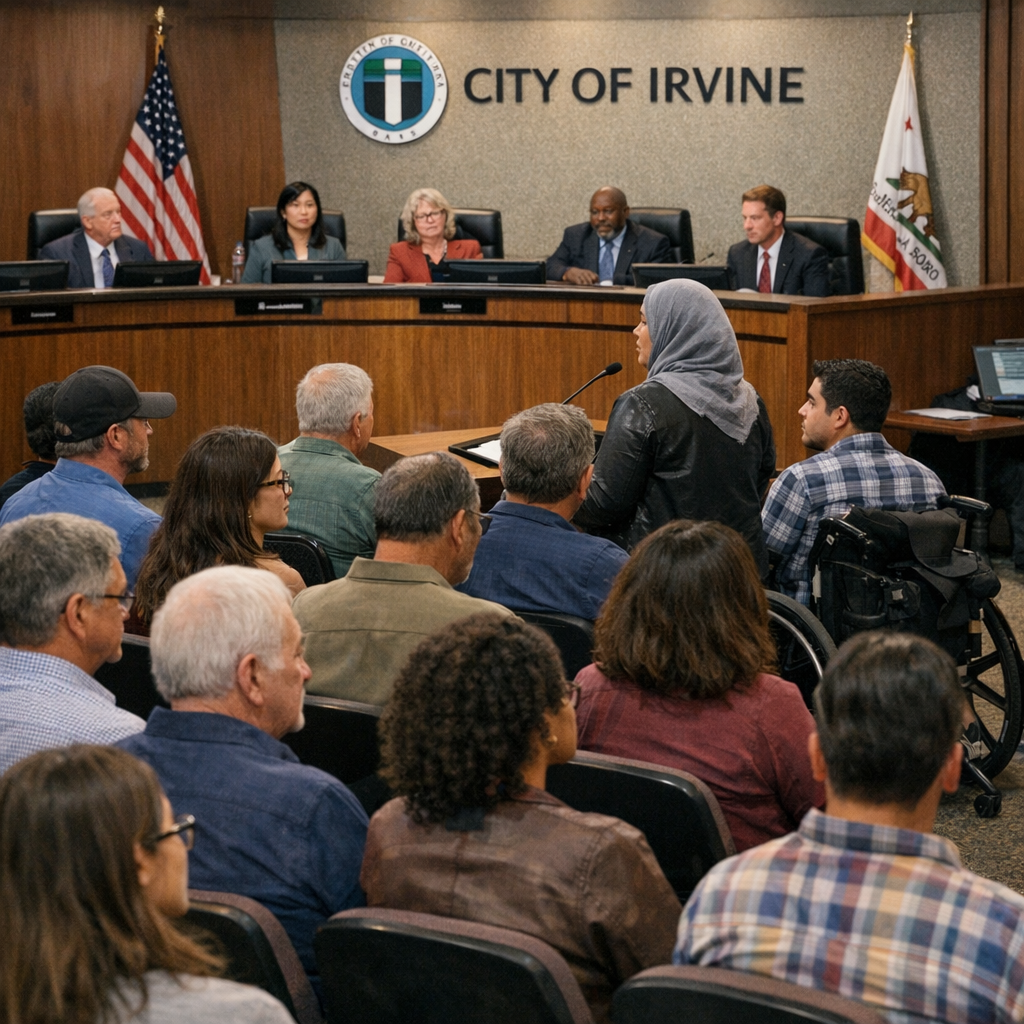
I’ve lived in Irvine long enough to know two truths: this city is full of bright, passionate people, and many of us don’t feel our voices are reaching City Hall. According to recent surveys, a significant chunk of residents feel local government favors big interests over everyday ones, and many don’t feel integrated into the community—because of cultural, language, or time barriers. But being heard doesn’t have to be a luxury. Here’s what you can do.
Why lots of people feel ignored
In a survey focused on residents’ sense of connection, nearly 20% said they rarely or never feel like they belong in the Irvine community. Many pointed to language differences or feeling disconnected unless they share interests with neighbors. When spaces for involvement require free time or specific skills, volunteers with less flexibility are left out. For some, it’s not apathy—it’s burnout or isolation. For others, it’s systems that favor louder voices.
Trust issues also run deep. A recent poll by a local group found less than a quarter of Orange County residents think their city government truly works for them. Many respondents believe decisions prioritize big developers or powerful interests rather than what’s good for the neighborhood. This belief is growing stronger among younger residents, even as many still engage with community groups or non-profits. Feeling ignored isn’t just unpleasant—it’s corrosive.
How to make sure your voice is heard
1. Use public comment and council meetings
Irvine holds City Council meetings twice a month. Whether it’s at City Hall in person or via Zoom, there are public comment periods where any resident can speak up. Be concise, bring examples, and stay focused—these moments are official and recorded. Over time, even small comments can build momentum.
2. Engage through local advisory groups and surveys
The city often solicits opinions via surveys, forums, and advisory committees. These are more than suggestions—they help shape policy. Find out what groups exist in your district or neighborhood and sign up. If there isn’t one, suggest creating it. Residents participating in forums around public health, open space, and transportation are already impacting decisions.
3. Partner with neighborhood groups and non-profits
Many locals find common cause with neighbors, school associations, faith organizations, or nonprofits. Sharing stories, organizing around specific issues, and collaborating amplifies impact. More voices working together tend to get attention from councilmembers or local boards.
What the city can do, and what we should demand
For real change, the city government needs to make space intentionally for all residents, especially those who feel marginalized. That means providing translation or interpretation services in public meetings, holding forums at accessible times and locations, and ensuring agendas are published well in advance.
Transparency also matters. When residents can see draft plans, permit applications, and city finances clearly, it builds trust. It also helps us spot areas where big interests may be influencing outcomes over common good. Accountability isn’t only the responsibility of elected officials—it’s ours, together.
Why it’s worth stepping up
Because when everyone participates, policies tend to be fairer, infrastructure gets more balanced, and quality of life improves—for parks, roads, schools, safety. Getting involved isn’t always easy, but it’s how communities remain strong. Irvine is home to many cultures, experiences, viewpoints. If enough of us commit to speaking up, there’s no reason we can’t build a future that feels truly like ours.
— Nathan Shah